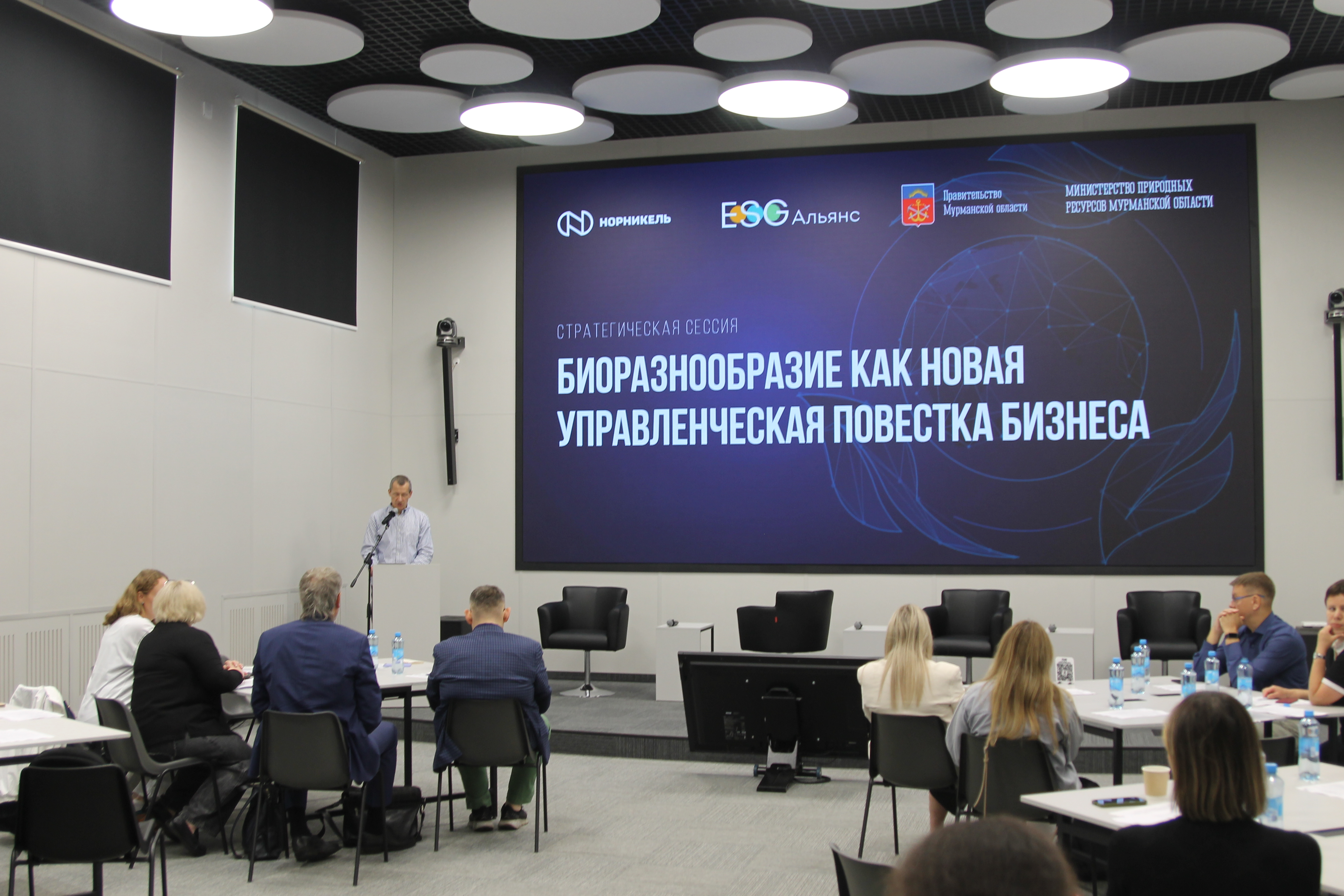
In Murmansk, the ESG Alliance and Nornickel jointly hosted an event marking World Whale Day and dedicated to biodiversity conservation. The centerpiece of the program was the strategic session “Biodiversity as a New Management Priority for Business,” which brought together representatives of leading Russian companies, government authorities, the scientific community, and specially protected natural areas.
Participants discussed why biodiversity is no longer solely a conservation issue but is becoming an integral part of corporate strategy. While just a few years ago businesses focused primarily on climate change and decarbonization, today the agenda increasingly encompasses ecosystem resilience, the natural capital of regions where companies operate, the quality of engagement with local and regional stakeholders, and companies’ ability to manage long-term environmental risks. These issues are gradually shaping a new approach to business management in Russia.
Particular attention was paid to developing tools that can facilitate a shift from individual conservation initiatives to a systemic approach to biodiversity management. Participants discussed how to measure corporate projects and assess their effectiveness, as well as how businesses can engage with regional authorities, the scientific community, and specially protected natural areas. They also highlighted the need for common methodological approaches that would make it possible to compare companies’ results and scale up best practices.
One of the topics discussed was the development of the Classification of Corporate Projects in Biodiversity and Ecosystem Services, the first iteration of which was presented to the market by the ESG Alliance last year.
As part of the event, Nornickel also presented its ten-year biodiversity conservation program, which brings together a range of the company’s environmental initiatives within a long-term approach to ecosystem management in its regions of operation.
Andrey SHARONOV, CEO of the ESG Alliance:
“The biodiversity agenda is rapidly moving beyond the environmental function of a company. Today, it is also a matter of the quality of corporate governance. Strong management decisions require clear assessment tools, a common terminology, and the ability to compare the results achieved by different companies. This is precisely the infrastructure we are systematically developing together with business. The next step is to move from individual successful practices toward common standards for natural capital management.”
Roman SHARKIY, CEO of Kola MMC:
“For Kola MMC, biodiversity conservation is a complex task and an integral part of our long-term sustainable development strategy. We use advanced technologies to continuously monitor the state of the environment. Together with scientists and nature reserves, we are developing a comprehensive approach to responsible stewardship of nature, from assessment to the implementation of practical measures.
We are always open to dialogue and ready to share our experience with our partners. We are confident that joint efforts, business support for voluntary projects aimed at conserving natural capital, and the exchange of best practices in ecosystem restoration will make an important contribution to protecting biodiversity.”
The second day of the program focused on practical work with natural areas. Participants visited the Teriberka Nature Park, where they discussed the conservation of northern ecosystems, cooperation between businesses and specially protected natural areas, and the role of regional projects in achieving national biodiversity conservation goals.
Following the event, participants noted that the next stage in the development of the corporate biodiversity agenda is not so much about increasing the number of individual environmental projects as about establishing a common natural capital management system based on measurable outcomes, partnerships, and consistent approaches to assessing results.